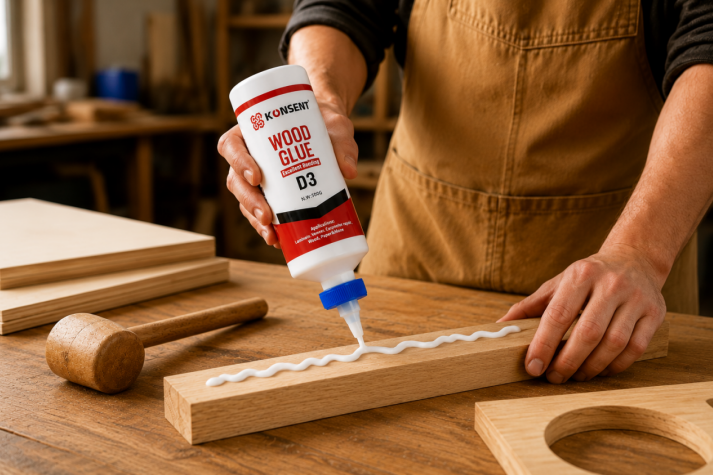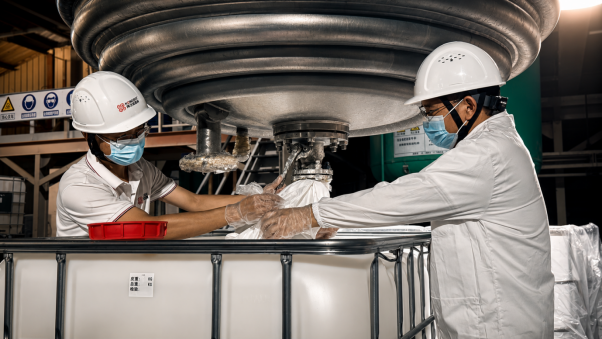
Subpar bonding solutions in high-speed manufacturing lead to joint failure, material waste, and costly product returns. Industrial woodworking adhesives provide superior structural integrity, uniform stress distribution, and seamless finishes essential for modern automated production. By matching adhesive chemistry to specific material substrates and line speeds, manufacturers can drastically improve production yield, eliminate bottlenecks, and guarantee long-term product durability.
Modern furniture engineering relies heavily on chemical bonding rather than traditional mechanical fastening. As production speeds increase and composite materials become more complex, selecting the right adhesive technology is a critical engineering and procurement decision.
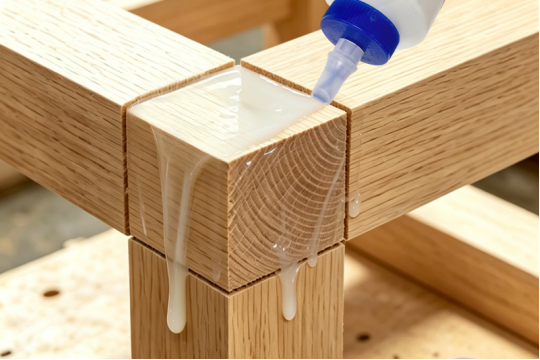
Table of Contents
- The Shift from Mechanical Fasteners to Industrial Adhesives
- Analyzing Core Adhesive Technologies for Furniture Production
- Addressing Automated Furniture Production Compatibility
- Application-Specific Performance: Matching Adhesives to Manufacturing Needs
- Environmental Sustainability and Low-VOC Innovations
- Cost and Production Efficiency: The Procurement Perspective
- Decision Framework: Choosing the Right Woodworking Glue Manufacturer
1. The Shift from Mechanical Fasteners to Industrial Adhesives
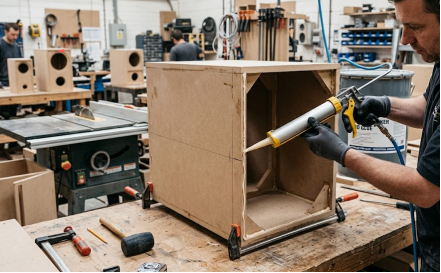
Mechanical fasteners create concentrated stress points and visible surface interruptions that compromise both structural integrity and design aesthetics. Industrial woodworking adhesives replace screws and nails by distributing load-bearing stress evenly across the entire bond line, resulting in stronger, lighter, and visually seamless furniture components.
In interior design and commercial furniture manufacturing, the combination of disparate materials requires a highly versatile bonding approach. Adhesives penetrate the porous structures of wood fibers to create mechanical interlocking at a microscopic level, while simultaneously providing chemical adhesion to synthetic surfaces.
To engineer reliable joints, product designers and production managers must account for material behavior under stress:
- Stress Distribution: Unlike screws that pull at single points, high-strength industrial adhesives distribute dynamic and static loads across the entire surface area, significantly reducing the risk of MDF or particleboard splitting.
- Aesthetic Freedom: Adhesives enable the manufacturing of curved plywood structures, seamless edge bands on cabinets, and ultra-thin wood veneer applications that would shatter or split if mechanically fastened.
- Material Compatibility & Movement: Different materials expand and contract at different rates. When bonding identical wood substrates with low moisture content (under 12%), rigid panel adhesives provide sufficient structural hold. However, if a design involves materials with differing coefficients of thermal expansion—such as bonding decorative metal components to wood panels—manufacturers must specify an elastomeric polyurethane (PUR) adhesive to absorb structural movement and prevent warping or delamination over time.
2. Analyzing Core Adhesive Technologies for Furniture Production
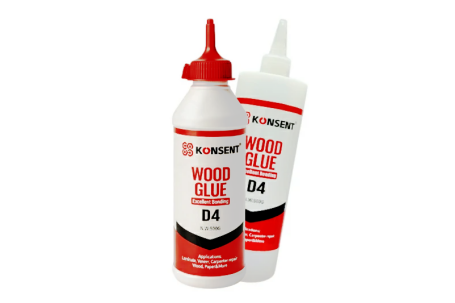
Selecting the wrong polymer base for your furniture adhesives leads to premature delamination and production bottlenecks. The foundation of reliable furniture manufacturing relies on three primary adhesive technologies: Water-based Dispersions, Thermoplastic Hot Melts, and Reactive Polyurethanes (PUR), each serving specific thermal and operational requirements.
Understanding the curing mechanism of these adhesives is essential for preventing structural failures on the assembly line.
- Water-Based Adhesives (PVAc & EPI): These cure through the evaporation and absorption of water into the wood substrate. While they provide excellent bond strength for solid wood assembly, they require longer press times and porous substrates to cure effectively.
- Thermoplastic Hot Melts (EVA & APAO): These cure purely through a temperature drop. They melt upon heating and solidify rapidly upon cooling, making them ideal for high-speed continuous lines. However, they can reactivate if exposed to high heat post-production.
- Reactive Hot Melts (PUR): PUR adhesives undergo a two-stage curing process. First, they cool and solidify like standard hot melts to provide initial “green strength.” Second, they chemically cross-link with moisture in the air and substrate to form an irreversible, thermosetting bond.
- Moisture & Heat Resistance: When engineering furniture for high-stress environments, standard EVA adhesives often fall short. Manufacturers should transition to Polyurethane (PUR) hot melts whenever the final product will be exposed to high humidity environments (like kitchen cabinets or bathroom vanities) or ambient temperatures exceeding 60°C, ensuring the bond remains structurally sound under extreme conditions.
Table 1: Adhesive Technology Comparison for Manufacturing
| Adhesive Technology | Curing Mechanism | Best For | Production Complexity | Recommended Scenario |
| PVAc (Water-Based) | Moisture absorption | Solid wood assembly, dowels | Low (Room temperature) | Standard interior wood furniture assembly |
| EVA Hot Melt | Thermal cooling | Standard edge banding, profiles | Medium (Requires heated tanks) | High-volume office furniture edge banding |
| PUR Hot Melt | Cooling + Moisture cross-linking | Kitchen/Bath cabinets, high-gloss panels | High (Requires sealed systems) | Premium furniture requiring extreme heat/water resistance |
| EPI (Emulsion Polymer Isocyanate) | Chemical cross-linking | Structural wood panel glue, beams | High (Requires precise mixing) | Load-bearing wooden structures and exterior doors |
3. Addressing Automated Furniture Production Compatibility
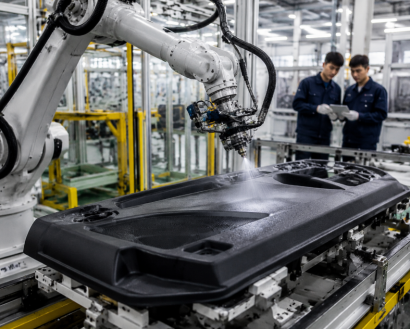
Adhesives that perform perfectly in manual assembly often fail catastrophically on automated production lines due to improper rheology and timing. To ensure automated production compatibility, industrial woodworking adhesives must possess precisely engineered viscosity stability, tailored open times, and rapid setting speeds that match the feed rate of CNC machinery.
Modern OEM furniture factories utilize CNC woodworking machines, automatic edge banders, and continuous lamination lines. The technical challenge is that the adhesive must remain fluid long enough to achieve uniform coating but cure fast enough to allow immediate downstream processing without shifting.
- Open Time vs. Setting Time: If an adhesive skins over before the substrates are joined, the bond will fail. Conversely, if the setting time is too slow, parts will shift as they move down the conveyor, causing dimensional inaccuracies.
- Viscosity and Rheology Control: If a wood adhesive is too viscous, it will string and clog applicator nozzles, leading to machine downtime and defective boards. If the viscosity is too low, the adhesive will over-penetrate porous MDF or particleboard, leaving a “starved” glue line that lacks bonding strength.
- High-Speed Line Optimization: The feed rate of your machinery dictates your adhesive formulation. For automated edge banding machines operating at feed speeds exceeding 20 meters per minute, factories must utilize an unfilled EVA or PUR hot melt adhesive. Unfilled formulations ensure rapid substrate wetting and prevent mineral filler buildup in applicator nozzles during high-speed operations.
4. Application-Specific Performance: Matching Adhesives to Manufacturing Needs
A universal “wood glue” does not exist in industrial manufacturing; different components require highly specialized chemical formulations. Selecting application-specific formulations—such as rigid lamination adhesives for flat panels or high-tack edge banding adhesives for curved surfaces—prevents common manufacturing defects like veneer peeling, edge lifting, and panel blistering.
Industrial Panel Lamination Adhesive
When producing large-format MDF boards, plywood panels, and HPL laminates, manufacturers require an adhesive for laminate that provides extended open times and bubble-free coverage.
- Lamination lines use roller coaters that demand highly stable adhesive spreading.
- The primary goal is achieving high shear strength and a perfectly flat surface, especially for high-gloss acrylic or PET panels where microscopic glue bumps would ruin the visual finish.
Wood Veneer Adhesive
Luxury hotel furniture and high-end interior designs heavily utilize ultra-thin natural wood veneers.
- A dedicated wood veneer adhesive must provide high initial tack to prevent the veneer from lifting or curling at the edges before the pressing cycle is complete.
- When working with porous, ultra-thin natural wood veneers, factories must select an adhesive with higher viscosity and controlled penetration properties. If a low-viscosity glue is used, it will cause bleed-through, which irreparably ruins the wood’s surface for staining and finishing.
Edge Banding Adhesive
The edge band is the most vulnerable part of any panel furniture.
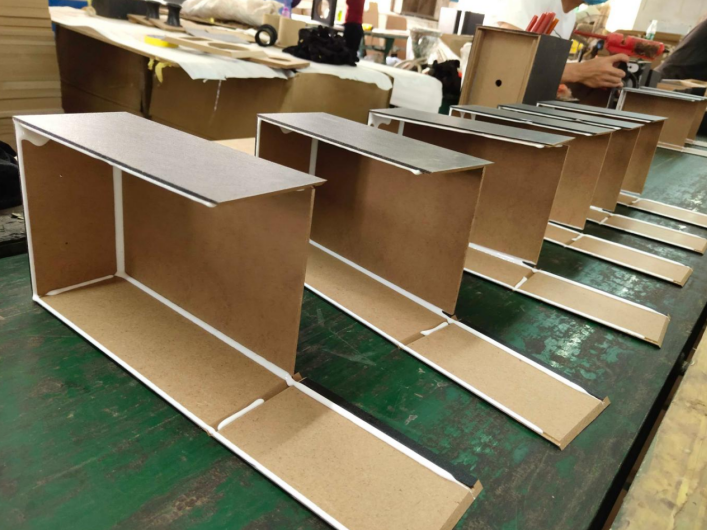
- Edge banding adhesives must melt quickly, spread thinly to create an “invisible” glue line, and instantly lock the PVC, ABS, or wood veneer tape to the board.
- High initial green strength is critical so the panels can immediately enter the trimming and routing stations without the edge tape slipping.
Furniture Assembly Adhesive
For structural joints (dowels, mortise and tenon, finger joints), furniture assembly adhesives must offer high gap-filling capabilities.
- These adhesives must possess exceptional final tensile strength to ensure the skeleton of the furniture remains rigid throughout its lifecycle.
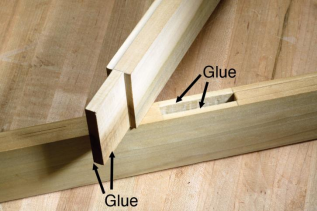
Table 2: Application vs. Required Performance Matrix
| Application | Primary Material Substrates | Critical Performance Requirement | Risk of Incorrect Adhesive Selection |
| Panel Lamination | MDF, HPL, PET, Plywood | Extended open time, uniform spreadability | Surface blistering, delamination over large areas |
| Edge Banding | Particle board, ABS, PVC tape | High initial tack, extreme heat resistance | Edge tape peeling during transport or summer heat |
| Veneer Bonding | Natural wood veneer, MDF | Bleed-through resistance, smooth finish | Staining defects, veneer curling at borders |
| Profile Wrapping | Wood profiles, decorative foil | High green strength, elasticity | Foil wrinkling or detaching on sharp corners |
5. Environmental Sustainability and Low-VOC Innovations
Global regulatory standards and consumer demands are forcing the furniture industry to abandon solvent-heavy chemicals. Transitioning to low-VOC and formaldehyde-free industrial woodworking adhesives is no longer optional, but a mandatory compliance standard for furniture manufacturers targeting international markets like the US and EU.
Traditional urea-formaldehyde resins, while historically cheap and effective, emit harmful gases long after the furniture is installed. Today’s interior design applications demand environmentally friendly formulations that meet stringent certifications such as CARB Phase II, EPA TSCA Title VI, and GREENGUARD.
- Advanced Formulations: Manufacturers are heavily investing in advanced water-based polymer emulsions and 100% solid hot melts that emit zero volatile organic compounds (VOCs).
- Compliance and Safety: Airborne chemical emissions are a major liability for commercial interior projects. If the manufactured furniture is intended for healthcare facilities, schools, or enclosed commercial interior designs, water-based adhesives or zero-VOC PUR hot melts are strictly required to meet stringent indoor air quality compliance and pass international certification audits.
6. Cost and Production Efficiency: The Procurement Perspective
Procurement managers often make the critical mistake of evaluating adhesives based solely on the price per kilogram. In industrial furniture manufacturing, true adhesive cost must be calculated based on production efficiency, coat weight reduction, and the minimization of rework and scrap rates.
An inferior, cheap wood furniture adhesive often requires a thicker application (higher coat weight) to achieve the same bond strength as a premium adhesive. This immediately offsets the initial cost savings.
- Production Bottlenecks: Low-quality adhesives are the leading cause of production slowdowns. If a panel bonding adhesive requires 30 minutes of clamp time instead of 10 minutes, it reduces the factory’s daily output by a factor of three, driving up overhead and labor costs per unit.
- The Cost of Failure: The hidden cost of reworking a delaminated cabinet door—factoring in wasted wood substrate, labor, logistics, and reputational damage—is typically 15 to 20 times higher than the cost of the adhesive used to bond it.
- Long-Term ROI: Investing in a premium PUR or highly engineered EVA hot melt drastically lowers overall manufacturing costs. By accelerating processing speeds, allowing for thinner coat weights, and virtually eliminating warranty claims, higher-performance adhesives provide a significantly lower total cost of ownership.
7. Decision Framework: Choosing the Right Woodworking Glue Manufacturer
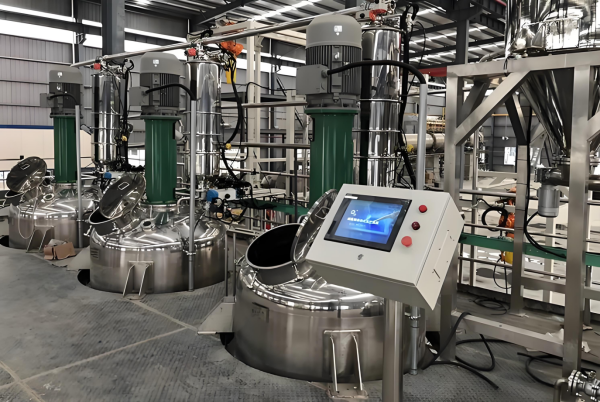
For OEM furniture factories and large-scale producers, the adhesive supplier is not just a vendor, but a strategic manufacturing partner. Selecting an industrial woodworking glue manufacturer requires evaluating their ability to provide batch-to-batch consistency, bulk supply logistics, and custom adhesive laminating formulations tailored to your specific equipment and climate.
Off-the-shelf adhesives often fail when introduced to unique manufacturing variables. A factory operating in a highly humid tropical climate requires a significantly different curing profile than a factory in a dry, cold region, even if they are using the exact same automated edge banding machine.
When evaluating a supplier, prioritize those who offer:
- Custom Adhesive Laminating: The ability to tweak viscosity, open time, and tack based on your exact wood substrate and line speed. Off-the-shelf products are often insufficient for specialized production. Procurement teams should request custom adhesive formulations when their factory utilizes proprietary composite materials or operates continuously in extreme ambient temperature conditions that alter adhesive curing rates.
- Application Testing: Look for suppliers who conduct rigorous lab tests on your specific core boards and edge tapes before recommending a product. This eliminates guesswork on the production floor.
- Production Optimization Support: A reliable manufacturer provides on-site technical support to help calibrate machine temperatures, roller pressure, and feed speeds for optimal adhesive performance.
Conclusion
The selection of industrial woodworking adhesives directly dictates the structural integrity, aesthetic quality, and manufacturing efficiency of modern furniture and interior design applications.
Key Technical Insights & Selection Logic:
- Match Chemistry to Stress: Standard PVAc is sufficient for basic assembly, but engineers must upgrade to PUR hot melts for areas exposed to heat, moisture, and high dynamic stress to ensure irreversible, thermoset bonding.
- Optimize for Machinery: The adhesive’s rheology must align with equipment speeds. Fast-curing, unfilled adhesives are mandatory for high-speed CNC and continuous edge banding lines to prevent equipment jamming.
- Calculate True Cost: Procurement decisions must factor in production speed and defect reduction. An adhesive that allows for thinner coating weights and faster clamp times provides a higher ROI than a lower-priced alternative that causes line bottlenecks.
- Demand Customization: Partner with suppliers capable of delivering custom adhesive laminating solutions tailored to your factory’s specific climate variables, proprietary materials, and machine feed rates.
By transitioning from a commodity-purchasing mindset to an engineering-driven selection process, manufacturers can secure a highly competitive edge in production output, product quality, and environmental compliance.
Looking to optimize your furniture production line?
As an experienced industrial woodworking glue manufacturer, KONSENT provides comprehensive adhesive solutions engineered for automated equipment and complex material substrates. Contact our technical team today to request a technical consultation, material evaluation, or production-grade samples to test directly on your assembly line.
Frequently Asked Questions (FAQs)
1. What is the difference between open time and setting time in woodworking adhesives?
Open time is the maximum window allowed between applying the adhesive and bringing the two substrates together before the adhesive begins to skin over and lose its bonding ability. Setting time (or clamp time) is the minimum time the substrates must be held together under pressure to achieve enough initial “green strength” to be moved to the next production step safely.
2. Why is my edge banding tape peeling off the particleboard after a few months?
This defect is typically caused by insufficient heat resistance in the adhesive or a “starved” glue line resulting from high panel porosity. If the furniture is exposed to direct sunlight, high room temperatures, or shipped in hot containers, standard EVA hot melts can reactivate and soften. Upgrading to a high-heat resistant EVA or a moisture-curing PUR adhesive resolves this issue permanently.
3. Can I use standard water-based wood glue on high-gloss PET or acrylic laminates?
No. Water-based adhesives rely on evaporation and substrate absorption to cure. Because PET and acrylic materials are entirely non-porous, the moisture cannot escape, resulting in a failed, wet bond line. Manufacturers must use a specialized industrial panel lamination adhesive, typically a reactive PUR, which chemically adheres to non-porous synthetic surfaces without requiring moisture evaporation.
4. How does Custom Adhesive Laminating improve production speed?
Standard adhesives are formulated for average, middle-of-the-road conditions. Custom adhesive laminating involves adjusting the polymer formulation to precisely match your factory’s specific ambient temperature, the exact porosity of your wood panels, and the feed rate of your machinery. This alignment eliminates waiting times for curing, prevents equipment jams, and maximizes daily throughput.
5. Is PUR hot melt adhesive truly waterproof?
Yes. Once PUR adhesives fully cross-link with the moisture in the air and the wood substrate, they undergo a chemical change that forms an irreversible thermoset polymer network. This makes the cured bond line completely impervious to water, steam, and high temperatures, establishing it as the industry standard for bathroom cabinetry, kitchen countertops, and marine furniture.
6. How do I prevent wood veneer from showing adhesive bleed-through?
Bleed-through occurs when a low-viscosity adhesive is pushed through the natural pores of thin wood veneer during the pressing cycle. To prevent this, factories must use a specifically formulated wood veneer adhesive with a higher viscosity and controlled penetration rate. Additionally, production managers must ensure that press pressure and temperature are accurately calibrated to avoid over-squeezing the adhesive through the wood grain.