In the highly automated packaging industry, selecting the wrong adhesive leads to catastrophic delamination, film peeling, and costly production downtime. Because modern packaging incorporates a diverse mix of paper, BOPP, PET, PE, PVC, and aluminum foil, a universal “one-size-fits-all” adhesive simply does not exist. Matching the chemical formulation of your packaging adhesive to the specific surface energy and porosity of your substrate is the only way to ensure structural integrity and maximize machine efficiency.
Here is my technical breakdown of how to evaluate and select the correct adhesive systems for various packaging materials to eliminate lamination failures on the factory floor.
Table of Contents
- Navigating the Complexities of Paper and Cardboard
- Flexible Packaging Films: PET, BOPP, and PE
- Tackling Aluminum Foil and Printed Laminates
- Technical Comparison of Packaging Substrates
- Strategic Procurement for Packaging Manufacturers
- Conclusion & Expert Recommendation
1. Navigating the Complexities of Paper and Cardboard
Paper and cardboard substrates require water-based laminating adhesives with rapid setting speeds and controlled penetration to overcome the physical memory of folded paper.
Paper fibers act like microscopic sponges. I frequently see factory operators attempt to save pennies by dialing back the glue volume, only to cause “starved joints” because the corrugated board absorbs the liquid before it can bond. To prevent this, you need a specialized paper laminating adhesive (often a VAE or PVA emulsion) with aggressive wet tack.
According to industry insights frequently discussed on Packaging Digest, a leading portal for packaging professionals, maintaining adhesive consistency on high-speed folder-gluers is the absolute top priority for minimizing waste in carton production. If the setting speed is too slow, the machine’s compression belt will eject the carton before the bond stabilizes, causing it to pop open instantly.
2. Flexible Packaging Films: PET, BOPP, and PE
Flexible packaging films demand specialized polyurethane adhesives engineered for high elasticity and strong chemical cross-linking to successfully bond to low-surface-energy plastics.
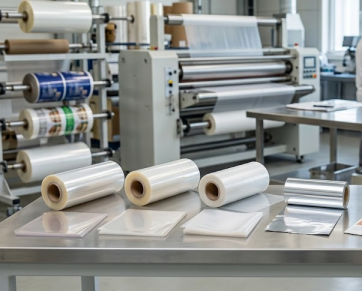
This sector heavily relies on non-rigid materials like plastic films, which must yield easily without fracturing. Bonding these structures is notoriously difficult due to their low dyne levels (surface tension).
The biggest trap engineers fall into here is ignoring surface energy. If the film’s surface tension is lower than that of the liquid adhesive, the glue simply beads up—like water on a waxed car. You must deploy a solventless or solvent-based film laminating adhesive tailored specifically for inert surfaces. In my experience, utilizing a dedicated flexible packaging adhesive is the only way to ensure the pouch won’t delaminate when crumpled, frozen, or exposed to acidic foods.
3. Tackling Aluminum Foil and Printed Laminates
Aluminum foil and printed films require adhesives with high thermal stability and neutral chemical profiles to prevent thermal shearing and ink degradation.
Foil is entirely non-porous and expands at a different rate than plastic when heated. During thermal processing—such as retort sterilization for food packaging—this thermal expansion mismatch can shear the adhesive layer apart. Therefore, a heat-resistant food packaging adhesive formulated with specific metal adhesion promoters is non-negotiable.
When dealing with printed laminates, optical clarity is where cheap glues consistently fail. If the monomers or solvents in your laminating adhesive react aggressively with the cured printing inks, you will experience ink bleeding, solvent migration, and trapped micro-bubbles. A chemically neutral adhesive with perfect leveling properties is required to protect the brand’s visual identity.
4. Technical Comparison of Packaging Substrates
Selecting the correct formulation requires aligning the adhesive’s physical properties with the structural weaknesses of the packaging materials.
| Substrate Combination | Primary Engineering Challenge | Required Adhesive Characteristics | Recommended Adhesive Type |
| Paper to Cardboard | High porosity absorbs glue too quickly, leading to starved joints. | Fast setting speed, high initial tack, controlled fiber penetration. | Water-Based Paper Laminating Adhesive |
| PET / BOPP to PE | Low surface energy prevents spreading; materials flex constantly. | High elasticity, moisture resistance, strong chemical cross-linking. | Polyurethane Flexible Packaging Adhesive |
| Aluminum Foil to PET | Thermal expansion mismatch; zero porosity for physical anchoring. | Extreme heat resistance, specific metal-anchoring chemical promoters. | High-Barrier Laminating Adhesive |
| Printed Film to Film | Solvents in glue dissolve or shift surface printing inks. | Optical clarity, bubble-free flow, neutral chemical profile. | Solventless Film Laminating Adhesive |
5. Strategic Procurement for Packaging Manufacturers
Successful adhesive procurement focuses on multi-substrate compatibility, automated line speeds, and minimizing lamination failures rather than merely comparing the cost per kilogram.
As detailed in the Wikipedia article on Surface energy, wetting a solid surface with a liquid adhesive requires precise thermodynamic alignment. Translating this physics principle to the factory floor means that B2B buyers must prioritize customized formulations over generic bucket glues.
When manufacturing clients ask me to recommend a packaging glue, my first questions are always about their machine line speed and the exact layers of their composite films. Buying a cheaper adhesive that causes a 3% increase in film peeling or bubble defects will obliterate your profit margins. An industrial packaging adhesive that ensures high-speed machine compatibility and food-contact compliance will always deliver a lower total cost of ownership.
6. Conclusion & Expert Recommendation
You cannot force a paper adhesive to bond a plastic film, nor can you expect a standard hot melt to survive a high-temperature retort pouch. Selecting the correct packaging adhesive requires a strict technical evaluation of the substrate’s porosity, surface energy, and the physical stresses it will endure in the supply chain.
Optimize Your Packaging Performance with KONSENT
Choosing the right adhesive for your specific packaging substrate is critical to reducing production waste and preventing field failures. KONSENT provides highly engineered packaging adhesive solutions tailored for flexible packaging, film lamination, paper cartons, and complex industrial applications. Contact our engineering team today for professional substrate testing and customized adhesive formulations designed to maximize your continuous production efficiency.
Frequently Asked Questions (FAQs)
Can I use a standard paper glue to bond PET film to cardboard?
No. Standard paper emulsions lack the chemical properties required to anchor to the low surface energy of PET film. You must use a specialized film laminating adhesive designed specifically for paper-to-film lamination to prevent the film from peeling over time.
What causes bubble defects in printed film lamination?
Bubble defects generally stem from incompatible adhesive viscosity, improper machine roller tension, or a chemical reaction between the adhesive and the printing inks. Using an optically clear, solventless laminating adhesive with superior leveling properties usually eliminates this issue.
Why does my flexible packaging delaminate when exposed to cold temperatures?
Standard adhesives become brittle and lose their elastomeric properties at freezing temperatures. For frozen food packaging, you must specify a flexible packaging adhesive engineered to maintain its cross-linked flexibility at sub-zero temperatures.
How do I choose an adhesive for aluminum foil food packaging?
Because aluminum foil does not absorb liquids, you need an adhesive with metal adhesion promoters. If the packaging undergoes heat sterilization, a high-performance polyurethane-based food packaging adhesive with extreme thermal stability is mandatory to prevent thermal shearing.
What is the most important factor when running high-speed folding cartons?
Setting speed. The paper laminating adhesive must cure rapidly enough to hold the carton’s shape against the physical memory of the folded paper before the box exits the folder-gluer’s compression belt.