Selecting the wrong packaging adhesive supplier leads directly to catastrophic film delamination, severe production interruptions, and unacceptable product waste rates. A reliable packaging adhesive supplier must be evaluated not merely on unit price, but on their batch-to-batch quality control, ability to engineer custom formulations for specific substrates, and capacity to provide on-site technical troubleshooting. For industrial manufacturers, partnering with a true adhesive manufacturer rather than a standard distributor is the only way to guarantee continuous, high-speed automated production efficiency and long-term supply stability.
Table of Contents
- Why Evaluating a Packaging Adhesive Supplier Goes Beyond Price
- Assessing Adhesive Product Range and Application Expertise
- Manufacturing Capability and Batch-to-Batch Quality Control
- The Strategic Importance of Custom Packaging Adhesive Solutions
- Technical Support and Material Compatibility Testing
- Evaluating Long-Term Supply Stability for Industrial Production
- Real-World Supplier Requirements by Packaging Application
- Conclusion & Expert Recommendation
1. Why Evaluating a Packaging Adhesive Supplier Goes Beyond Price
Industrial buyers must prioritize total production cost efficiency over the lowest price per kilogram, as low-quality adhesives cause severe production downtime, increased adhesive consumption, and high reject rates.
In the B2B sector, the cost of a catastrophic bonding failure far outweighs any initial savings on raw materials. Unlike standard consumer glues, industrial formulations must perform flawlessly under the extreme stress of continuous manufacturing.
If a supplier provides a cheap adhesive with inconsistent viscosity, it forces machine operators to constantly adjust roller gaps and temperature settings, leading to massive machine downtime. The true metric for supplier evaluation is the total cost of ownership: how much adhesive is consumed per square meter, how fast the production line can run without errors, and the reduction of customer complaints. A professional supplier actively helps you lower your overall manufacturing costs by minimizing your waste rate and optimizing your machine parameters.
2. Assessing Adhesive Product Range and Application Expertise
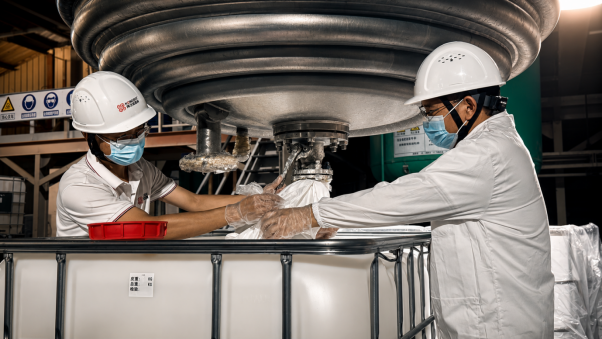
A capable packaging adhesive manufacturer must demonstrate deep application expertise across diverse substrates, offering specialized solutions for both high-barrier flexible films and high-speed folding cartons.
Modern packaging structures require bonding completely dissimilar materials. A supplier who only understands simple paper glues cannot support a factory transitioning into flexible pouch manufacturing.
When evaluating a supplier’s product range, analyze their specific competencies:
- Flexible Packaging: The supplier must understand how to bond low-surface-energy films like BOPP, PET, PE, CPP, and aluminum foil. These applications require a flexible packaging adhesive supplier capable of delivering polyurethane systems that offer strong interlayer bonding, extreme flexibility, and absolute heat and moisture resistance for food safety.
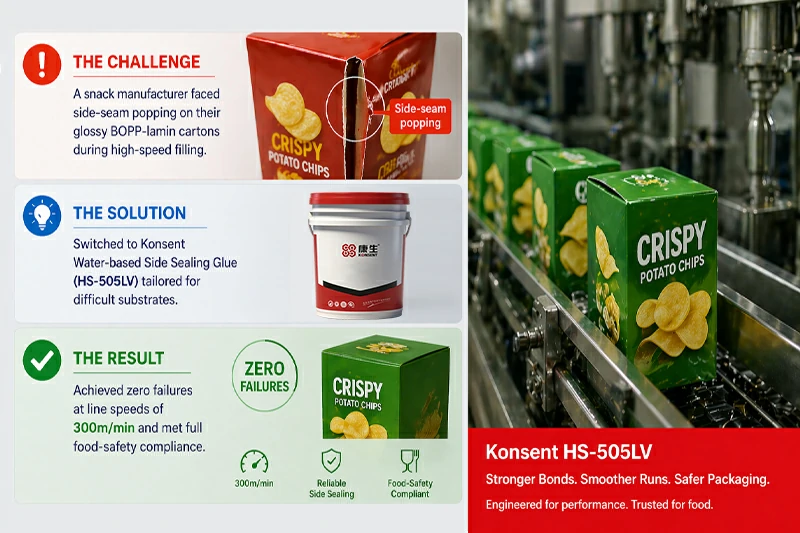
- Paper and Board Packaging: For folding cartons and gift boxes, the chemical requirements shift dramatically. The supplier must offer water-based adhesives with exceptionally fast setting times, strong initial tack, and stable processing performance to prevent cartons from popping open on high-speed folder-gluers.

3. Manufacturing Capability and Batch-to-Batch Quality Control
Reliable suppliers enforce strict batch-to-batch quality control protocols to maintain consistent adhesive viscosity and bond strength, preventing unexpected chemical fluctuations from jamming automated production lines.
The difference between a generic trading company and a true packaging adhesive manufacturer lies in factory capacity and quality management. In adhesive manufacturing, standardization is critical because a minor fluctuation in solid content or viscosity will completely alter how the glue spreads on your lamination equipment.
Before entering a long-term contract, audit the supplier’s manufacturing capability. Do they have stable raw material sourcing? Do they utilize professional testing procedures before shipping every batch? You must demand Certificates of Analysis (COA) that verify consistent drying/curing performance and long-term storage stability. If a supplier cannot guarantee batch consistency, your factory floor will become their testing ground, resulting in unacceptable product waste.
4. The Strategic Importance of Custom Packaging Adhesive Solutions
Partnering with a supplier capable of formulating custom packaging adhesive ensures that the chemical properties precisely match your unique substrate combinations, machine speeds, and factory environmental conditions.
No two factory lines are identical. You might run a PET/PE flexible packaging structure on a laminator running at 150 meters per minute in a highly humid environment, while a competitor runs BOPP film lamination at a slower speed in a dry climate. A standard, off-the-shelf catalog adhesive will rarely perform optimally for both.
High-value suppliers act as engineering partners. They develop custom packaging adhesive formulations by tweaking the polymer chain length, modifying tackifiers, or adjusting the solvent ratio based on your specific application equipment. This customization prevents common issues like film peeling or bubble formation in paper-film composite packaging. If a supplier refuses to adjust their formulation to meet your specific production constraints, they are not suitable for a long-term industrial partnership.
5. Technical Support and Material Compatibility Testing
A professional laminating adhesive manufacturer provides comprehensive technical support, including pre-production material compatibility testing and process troubleshooting, to eliminate the risk of delamination before mass production begins.
Industrial adhesive selection is a highly technical process. Effective bonding requires intimate contact between the adhesive and the substrate, heavily influenced by surface energy and chemical wetting properties. Because printing layers, decorative films, and new composite materials constantly change, you cannot simply guess if a glue will stick.
A reliable supplier sells bonding security. They should require you to send your actual substrate materials to their lab for compatibility testing before recommending a product. Furthermore, their technical support team should be available to guide your on-site adhesive selection, optimize your automated equipment parameters (such as roller temperature and coating weight), and provide immediate troubleshooting support if a production issue arises.
6. Evaluating Long-Term Supply Stability for Industrial Production
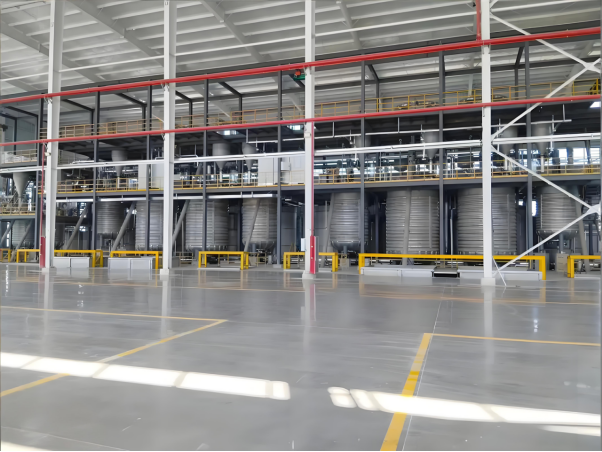
Selecting a supplier with massive factory capacity and stable raw material inventory guarantees reliable bulk delivery schedules, ensuring your continuous production systems never halt due to a broken supply chain.
For large-scale packaging manufacturers, an adhesive supply interruption is a catastrophic event that can force an entire factory to shut down. When evaluating a supplier for long-term cooperation, you must assess their supply chain resilience.
Can they handle sudden surges in bulk order requests? Do they maintain a stable inventory of raw materials to buffer against global chemical shortages? A true industrial partner demonstrates robust factory capacity and a track record of reliable delivery schedules. A supplier’s ability to maintain a steady flow of bulk packaging adhesive without logistical delays is just as critical as the chemical performance of the adhesive itself.
7. Real-World Supplier Requirements by Packaging Application
Different packaging sectors require suppliers to possess highly specialized knowledge to ensure the adhesive supports specific production goals, such as ink compatibility in printing or high-speed curing in carton folding.
To make an informed decision, align your supplier evaluation with your specific industry application:
- Flexible Packaging Manufacturers: Companies producing food pouches, snack packaging, and beverage containers require a supplier with deep flexible packaging adhesive expertise. The supplier must understand film surface tension, retort sterilization resistance, and regulatory requirements for food-safe lamination.
- Printing and Packaging Companies: When laminating printed film packaging or premium decorative boxes, the adhesive must not interact with or dissolve the printing inks. The supplier must guarantee excellent optical clarity and consistent bonding quality.
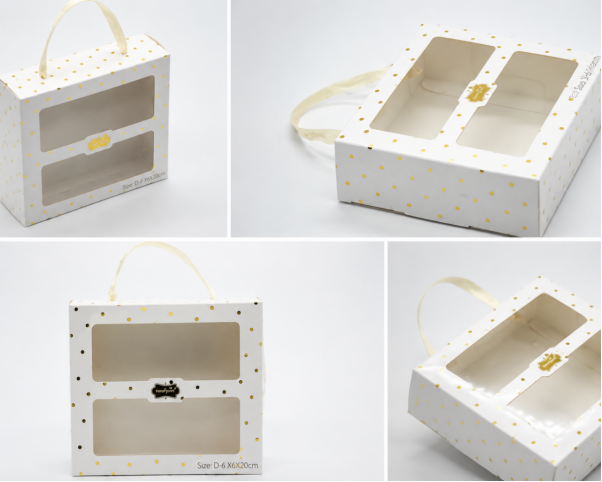
- Paper Packaging Manufacturers: Factories producing folding cartons and gift boxes demand adhesives that support high production efficiency. The supplier must provide formulations that grab instantly, allowing the cartons to be processed and packed at maximum machine speeds without springing open.
- Large-Scale Packaging Production Lines: For continuous automated lamination lines, the primary requirement is absolute stability. The supplier must provide adhesives with stable viscosity over long shifts and reliable batch consistency.
Supplier Evaluation Matrix
| Evaluation Factor | Standard Adhesive Distributor | Professional Packaging Adhesive Manufacturer | Impact on Your Factory |
| Material Testing | Relies on technical data sheets only. | Conducts lab testing on your specific substrates. | Eliminates the risk of mass delamination before production starts. |
| Batch Consistency | Fluctuates based on their upstream sources. | Strict in-house QC testing for viscosity and solids. | Prevents machine jams and the need for constant operator adjustments. |
| Customization | Sells standard “off-the-shelf” products. | Formulates custom packaging adhesive for your line speed. | Maximizes production efficiency and reduces total adhesive consumption. |
| Technical Support | Sales-focused, slow technical response. | On-site troubleshooting and process optimization. | Rapidly resolves line issues, minimizing expensive production downtime. |
8. Conclusion & Expert Recommendation
Choosing the right packaging adhesive supplier dictates the operational success and profitability of your manufacturing facility. Moving away from standard distributors and partnering with a true manufacturing facility guarantees that you receive consistent batch quality, rapid technical support, and the ability to customize formulations to match your exact machine parameters.
Expert Decision Rule: Never evaluate a supplier based on the cost per kilogram. Evaluate them on their ability to conduct substrate testing, their manufacturing capacity for bulk orders, and their track record of reducing product waste rates on automated production lines.
Partner with KONSENT for Reliable Production
Looking for a reliable packaging adhesive supplier for long-term cooperation? KONSENT provides highly engineered industrial adhesive solutions tailored for flexible packaging, film lamination, high-end printing, and paper packaging applications. We don’t just supply adhesives; we supply continuous manufacturing stability. Contact us today to discuss your substrate requirements, arrange material compatibility testing, and find the exact adhesive solution for your automated production process.
9. Frequently Asked Questions (FAQs)
Why should I choose a packaging adhesive manufacturer over a local distributor?
A true manufacturer controls the entire production process, ensuring strict batch-to-batch quality control, stable raw material sourcing, and the ability to formulate custom adhesives based on your specific machine speeds and substrates. Distributors often cannot guarantee batch consistency or provide deep technical troubleshooting.
What technical support should I expect from a reliable laminating adhesive manufacturer?
A professional supplier should offer comprehensive technical support, including testing your specific films (e.g., BOPP, PET, Aluminum Foil) in their lab prior to purchase, recommending exact coating weights, and assisting your engineers with optimizing machine temperatures and roller speeds.
How does adhesive batch consistency affect my packaging production line?
If an adhesive’s viscosity or solid content fluctuates between batches, your machine operators will have to constantly recalibrate the application rollers and drying temperatures. This inconsistency causes machine downtime, uneven glue spreading, and a high rate of defective packaging.
Can a supplier provide a custom packaging adhesive if my production speed increases?
Yes. If you upgrade your machinery to run at higher speeds, a capable supplier can reformulate the adhesive to feature a faster setting time and lower viscosity, ensuring the glue applies cleanly and cures rapidly enough to match your new production output.
Why is material compatibility testing so important for flexible packaging?
Flexible packaging utilizes low-surface-energy films and diverse printing inks. If the adhesive is chemically incompatible with the specific film coatings or ink resins, the layers will inevitably delaminate during transportation or storage. Lab testing guarantees the chemical bond before mass production begins.
What factors determine the true cost efficiency of an industrial packaging adhesive?
The lowest price per kilogram rarely equals the lowest manufacturing cost. True cost efficiency is determined by the adhesive’s coat weight (how much glue is actually needed per square meter), machine running speed, and the reduction of expensive product rejects and customer returns.