In audio equipment manufacturing, selecting the right industrial Speaker Adhesive is critical to preventing cabinet separation, acoustic noise, and cosmetic defects during long-term operation. Using the wrong adhesive formulation often leads to resonance failures, requiring costly manufacturing rework and damaging brand reputation. A reliable Speaker Adhesive manufacturer provides engineered solutions that offer exceptional vibration resistance, broad material compatibility, and consistent performance in mass production environments. This technical guide explores the material dynamics and supplier evaluation criteria necessary to choose the optimal bonding partner for your audio production lines.
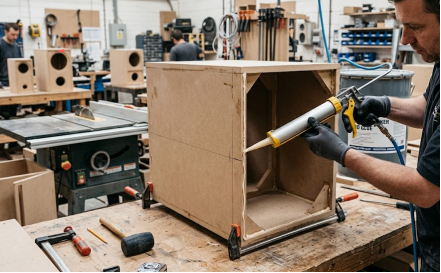
Table of Contents
- Why Specialized Adhesives Are Critical in Audio Equipment Manufacturing
- Material Compatibility: Solving Multi-Substrate Bonding Challenges
- Vibration Resistance: Preventing Acoustic Failures in Speaker Boxes
- Evaluating Production Process Compatibility for Mass Manufacturing
- Quality Control and Supply Stability in Adhesive Procurement
- Application Scenarios: Choosing the Right Adhesive for Your Project
- Supplier Selection Framework: Technical Evaluation Criteria
- Conclusion
1. Why Specialized Adhesives Are Critical in Audio Equipment Manufacturing
Industrial Speaker Adhesives are preferred over standard woodworking glues because they possess specific viscoelastic properties designed to withstand continuous low-frequency vibrations and maintain acoustic sealing.
The fundamental challenge in audio manufacturing is that the speaker enclosure acts as an active pressure vessel. Modern high-fidelity speakers are rarely made from a single material; they combine MDF, plywood, plastics, metal fixtures, and delicate acoustic foams.
If the speaker cabinet adhesive used is too rigid, the mechanical stress generated by bass frequencies will cause the bond line to fracture, leading to air leaks. These leaks alter the internal acoustic volume and introduce audible distortion, commonly known as chuffing. Conversely, if the adhesive is too soft, the cabinet loses its structural rigidity, absorbing acoustic energy rather than projecting it. Partnering with a professional speaker adhesive supplier ensures you achieve the delicate balance of high initial tack, structural rigidity, and long-term joint flexibility.
2. Material Compatibility: Solving Multi-Substrate Bonding Challenges
An experienced speaker adhesive manufacturer provides formulations capable of bridging varying surface energies, ensuring reliable adhesion across highly porous woods, low-surface-energy plastics, and sensitive decorative laminates.
High-value audio production rarely relies on simple wood-to-wood joints. A premium adhesive solution must adapt to the physical properties of multiple substrates:
- Porous Woods (MDF & Plywood): When bonding MDF, standard adhesives often penetrate the highly porous surface too quickly, starving the joint and leading to weak bonds. An optimal adhesive for wooden speaker cabinets must provide excellent gap-filling properties and controlled penetration. This locks the wood fibers together securely, ensuring the cabinet does not split during heavy acoustic loads.
- Dissimilar Materials (Wood-to-Plastic/Metal): As modern designs increasingly incorporate molded plastic bass reflex ports, bezels, and metal terminal cups, manufacturers face divergent surface energies. Traditional wood glues simply cannot grip plastics, leading to component rattling. High-performance adhesives must feature specialized polymer tackifiers that bite into smooth plastics while simultaneously creating a mechanical lock with the wood grain.
- Acoustic & Decorative Materials: Attaching veneers, laminates, and acoustic foams requires an adhesive that sets quickly without causing bleed-through, warping, or chemical reactions that could melt delicate foam structures.
If your assembly process involves bonding ABS plastic ports to raw MDF, you cannot rely on standard PVA wood glue. You must select a specialized industrial adhesive with high elastomeric properties and enhanced tackifiers to prevent the plastic components from vibrating loose over time.
Adhesive Selection by Material Application
| Bonding Combination | Typical Components | Primary Technical Challenge | Recommended Adhesive Profile |
| Wood-to-Wood | MDF panels, internal bracing | Substrate porosity, joint starvation | High cohesive strength, gap-filling, controlled penetration |
| Wood-to-Plastic | Bass reflex ports, bezels | Divergent surface energies | High tack, flexible curing, chemical compatibility |
| Composite/Laminate | Veneers, decorative covers | Aesthetics, bleed-through | Fast-setting, non-staining, smooth application profile |
| Wood-to-Metal | Mounting brackets, heat sinks | Thermal expansion mismatch | Elastomeric properties, high shear strength |
3. Vibration Resistance: Preventing Acoustic Failures in Speaker Boxes
A highly vibration resistant adhesive for speakers is critical for audio fidelity because it absorbs mechanical energy and maintains bond integrity under continuous dynamic fatigue without becoming brittle.
Speakers operate continuously under intense mechanical stress. Subwoofers, in particular, generate significant internal air pressure and kinetic energy. When evaluating speaker glue, engineers must look beyond static shear strength and prioritize dynamic fatigue resistance.
Once cured, the polymer matrix of the adhesive must retain enough elasticity to absorb micro-movements. If an adhesive dries completely brittle, continuous vibration will cause microscopic stress fractures over time. This leads directly to panel separation and localized rattling. Furthermore, the adhesive’s vibration-dampening properties must remain stable across varying temperatures and humidity levels, which is especially critical for automotive audio or professional touring equipment.
4. Evaluating Production Process Compatibility for Mass Manufacturing
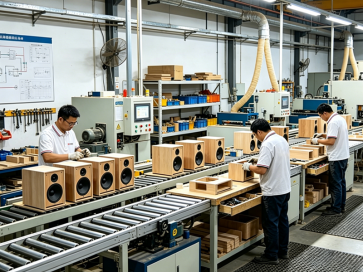
Selecting an industrial adhesive for audio equipment manufacturing must be dictated by your specific factory workflow; adhesive open times and viscosities directly impact the efficiency of manual, pressed, or automated assembly lines.
A supplier providing custom speaker adhesive solutions will evaluate your manufacturing floor before recommending a formulation. The physical properties of the adhesive must align with your assembly methods:
- Manual Assembly Operations: These require adhesives with a longer “open time” to allow operators to properly align complex cabinet geometries, combined with a strong initial grab to hold panels securely before clamping.
- Pressing Processes: For flat-panel lamination or high-speed pressing, the adhesive must spread evenly, resist squeeze-out, and cure rapidly under pressure to maximize machine throughput.
- Automated Dispensing Lines: Adhesives used in robotic application systems must possess shear-thinning properties—flowing smoothly through the dispensing nozzle under pressure, but recovering viscosity immediately upon application to prevent slumping or dripping.
5. Quality Control and Supply Stability in Adhesive Procurement
Evaluating a supplier’s quality control infrastructure is mandatory for OEM/ODM manufacturers because batch-to-batch adhesive consistency directly influences overall production defect rates and factory downtime.
For B2B industrial buyers, supply stability and consistent product formulation are often more critical than unit price. When choosing a speaker cabinet glue supplier, production managers must consider the manufacturer’s operational maturity.
If the viscosity, solid content, or curing time fluctuates between batches, automated dispensing equipment will require constant recalibration, leading to severe production bottlenecks. A premium, stable adhesive reduces secondary manufacturing costs associated with scraping failed cabinets, reworking loose veneers, and managing warranty claims for field failures.
A reliable manufacturer does not just sell chemicals; they provide traceable batch consistency and the supply chain scalability to support your peak manufacturing seasons without compromising quality.
6. Application Scenarios: Choosing the Right Adhesive for Your Project
Applying application-specific industrial Speaker Adhesives is recommended when manufacturing diverse product lines, as the structural demands of a large PA cabinet differ drastically from the aesthetic requirements of a desktop speaker.
Different audio products dictate distinct adhesive strategies:
- Large Wooden Speaker Box Assembly: When building high-powered PA systems or heavy home theater subwoofers, prioritize adhesives with exceptionally high wood adhesion, superior gap-filling capabilities for absolute acoustic airtightness, and maximum durability against extreme sound pressure levels.
- High-End Consumer Audio: For smart speakers or premium bookshelf monitors, the focus shifts to aesthetics and mixed-material assembly. The adhesive must securely bond plastic housings and metal grilles while ensuring no bleed-through damages the external wood veneers. Fast-curing profiles are essential here to match fast-paced electronics assembly lines.
7. Supplier Selection Framework: Technical Evaluation Criteria
When auditing a potential Speaker Adhesive manufacturer, procurement teams should move beyond standard specification sheets and ask technical questions that reveal true industry expertise:
- “How do your adhesives address MDF porosity and acoustic sealing?” This tests their fundamental understanding of wood-based audio manufacturing.
- “Can your formulations bridge the gap between rigid structural bonding and long-term vibration dampening?” This evaluates their technical capability in polymer modification.
- “Do you offer custom performance adjustments for our specific automated dispensing equipment?” This distinguishes true manufacturers who can modify rheology from basic chemical distributors.
- “What is your protocol for ensuring batch-to-batch consistency?” This checks their internal QA/QC rigor, which is vital for preventing factory downtime.
8. Conclusion
Choosing the right speaker adhesive supplier is a strategic engineering decision that directly dictates the structural integrity, acoustic performance, and production efficiency of your audio equipment. An optimal adhesive eliminates the risks of cabinet separation, vibrational noise, and cosmetic defects. By prioritizing suppliers who offer proven material compatibility, vibration-resistant formulations, and rigorous quality control for automated production, manufacturers can significantly reduce defect rates and streamline assembly workflows. The best choice is a partner capable of providing tailored technical support, sample testing, and consistent bulk supply rather than just off-the-shelf products.
Looking for a reliable speaker adhesive manufacturer for your audio production needs? Konsent provides industrial adhesive solutions for speaker box assembly, cabinet bonding, and audio equipment manufacturing. Contact our team to discuss your material requirements and find the right adhesive solution for your application.
9. Frequently Asked Questions (FAQs)
What is the best adhesive for speaker box assembly?
The ideal adhesive is a specialized industrial wood glue or structural polymer designed for high-strength, gap-filling applications. It must securely bond MDF or plywood while remaining slightly viscoelastic after curing to withstand continuous acoustic vibrations without cracking.
Why shouldn’t I use standard wood glue for speaker cabinets?
Standard wood glues dry completely rigid and brittle. Under the continuous low-frequency vibrations generated by speakers, brittle joints develop micro-fractures over time. This leads to air leaks, panel separation, and unwanted acoustic resonance (rattling).
How does adhesive selection affect the sound quality of a speaker?
Adhesives act as the primary acoustic seal of the speaker cabinet. If an adhesive fails to bridge gaps, air escapes the enclosure. This compromises the engineered internal air volume, significantly reducing bass response and introducing audible distortion.
Can speaker cabinet adhesives reliably bond plastic ports to MDF?
Yes, but it requires a specifically formulated adhesive for wood-to-plastic bonding. Standard PVA glues lack the tackifiers needed to grip low-surface-energy plastics. Specialized adhesives mechanically lock into the wood while chemically bonding to the plastic.
What factors should OEM/ODM audio factories prioritize when buying bulk adhesive?
Factories should prioritize batch-to-batch consistency, curing speed compatibility with their automated dispensing equipment, and the supplier’s ability to provide customized formulation adjustments for unique material combinations.