Selecting the wrong adhesive in industrial woodworking leads to catastrophic bond failures, high product return rates, and expensive production downtime. Industrial wood adhesives are engineered polymer solutions designed to replace traditional mechanical fasteners, offering invisible bonding, uniform stress distribution, and superior structural stability. For manufacturers, choosing the correct formulation dictates automated machine compatibility and long-term product durability. This guide breaks down the top 10 critical applications, technical evaluation criteria, and procurement strategies to help factory managers and engineers optimize their high-volume production lines.

Table of Contents
- The Evolution of Wood Bonding: Adhesives vs. Mechanical Fasteners
- Top 10 Applications of Industrial Wood Adhesives in Manufacturing
- Critical Technical Data for Evaluating Woodworking Adhesives
- Real-World Application Scenarios & Engineering Challenges
- Key Factors for Industrial Procurement Decisions
- Conclusion & Expert Recommendation
1. The Evolution of Wood Bonding: Adhesives vs. Mechanical Fasteners
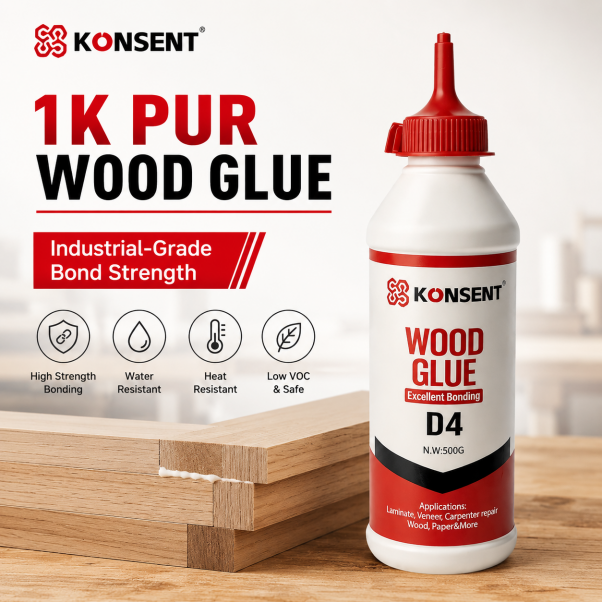
Industrial wood adhesives are highly preferred over traditional mechanical fasteners (nails and screws) in modern woodworking because they provide superior aesthetic finishes, eliminate stress concentration points, and allow for highly flexible product designs.
In traditional carpentry, mechanical fasteners were the standard. However, in large-scale modern manufacturing, these physical connectors create localized stress points that can cause wood splitting or MDF fiber degradation over time.
Transitioning to high-performance woodworking adhesives introduces several critical manufacturing advantages:
- Invisible Bonding: Eliminates the need for surface patching or covering screw heads, ensuring a flawless surface appearance for high-end furniture.
- Uniform Stress Distribution: Adhesive layers distribute physical loads evenly across the entire bonded surface area, significantly increasing the structural integrity of thin panels and composite woods.
- Flexible Product Design: Allows product designers to create complex, curved, or ultra-thin components that would be physically impossible to secure with metal fasteners.
- Machine Automation Compatibility: Adhesives can be applied rapidly via automated rollers, sprayers, or extrusion nozzles, drastically increasing production throughput compared to manual fastening.
2. Top 10 Applications of Industrial Wood Adhesives in Manufacturing
The application of industrial wood adhesives spans across 10 core manufacturing sectors, each requiring highly specific viscosity, curing times, and thermal resistance profiles to ensure production efficiency.
1. Furniture Assembly
Furniture adhesives used for structural assembly must provide high initial tack and exceptional gap-filling properties. In the production of chairs, tables, cabinets, and office furniture, dowel and tenon joints require an assembly adhesive that prevents joint loosening under dynamic stress. The adhesive must penetrate the wood fibers deeply to create a bond stronger than the wood substrate itself.
2. Panel Lamination
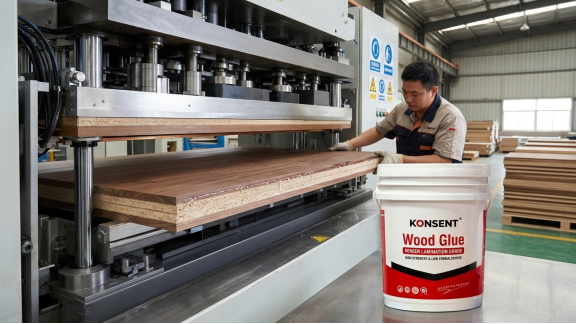
Manufacturing decorative panels from MDF, particle boards, or plywood requires specialized lamination adhesive. In automated flat-pressing operations, an industrial panel lamination adhesive must offer an optimal “open time” to allow workers to position large panels before the press activates. Uniform spreading across large surface areas is critical to prevent delamination or surface bubbling.
3. Edge Banding
Edge banding involves applying thin PVC, ABS, or wood veneer strips to the exposed edges of MDF or particleboard. An industrial edge banding adhesive must possess rapid melting characteristics and fast curing speeds to match the feed rate of automated edge banding machines. Furthermore, edge banding adhesive used in kitchen cabinets and modular furniture must exhibit high heat resistance to survive proximity to ovens and stovetops without the edge peeling away.
4. Wood Veneer Bonding
Applying thin slices of premium wood over cheaper substrates requires an ultra-stable wood veneer adhesive. In decorative furniture and luxury interior panels, an industrial veneer adhesive must be formulated to prevent “bleed-through”—a defect where the glue penetrates the thin veneer pores and ruins the final stained finish.
5. Plywood Manufacturing
The production of multi-layer structural panels and plywood relies on heavy-duty thermosetting resins. The adhesive must withstand extreme heat and pressure during the hydraulic pressing phase, curing into a rigid, moisture-resistant matrix that provides structural stability and prevents the multi-layer wood bonding from warping.
6. Solid Wood Joining
Joining solid wooden frames and traditional woodworking structures requires a high-strength woodworking glue that accommodates the natural expansion and contraction of solid timber. Since solid wood responds dynamically to environmental humidity, the wood adhesive must maintain a degree of microscopic flexibility to prevent joint fracturing.
7. Engineered Wood Flooring
Engineered flooring consists of a hardwood wear layer bonded to a composite or plywood core. Adhesives used in this sector must provide aggressive shear strength to resist the continuous dynamic impact of foot traffic, while also offering excellent moisture resistance to prevent sub-floor dampness from causing delamination.
8. Door Manufacturing
Whether producing solid wooden doors, panel doors, or decorative interior doors, manufacturers require adhesives with exceptionally high structural stability. Doors are often subjected to different climate conditions on each side (e.g., a cold hallway vs. a heated room), meaning the adhesive must resist thermal and hygro-expansion stresses to keep the door perfectly flat.
9. Interior Wood Decoration
Installing wall panels, decorative structures, and custom interiors requires specialized wood paneling glue. For vertical applications, these adhesives must provide “instant grab” (high initial tack) to prevent panels from sliding down the wall before the adhesive cures, eliminating the need for temporary mechanical bracing.
10. OEM Furniture Manufacturing
For large-scale, contract-based furniture production, a reliable furniture glue manufacturer is essential. OEM factories require bulk adhesives that guarantee absolute batch-to-batch consistency. Any variation in viscosity or curing speed can jam automated lines, causing massive production waste and missed delivery schedules.
3. Critical Technical Data for Evaluating Woodworking Adhesives
Evaluating an industrial wood adhesive requires analyzing its processing performance, application stability, and material compatibility to ensure it aligns with specific factory machinery and environmental demands.
Do not select a wood furniture adhesive based solely on its bonding strength. Factory efficiency relies heavily on how the chemical behaves during the application process.
Processing Performance
- Open Time: The maximum time allowed between applying the adhesive and joining the parts. Long open times are necessary for complex panel lamination, while short open times are preferred for high-speed edge banding.
- Setting Time & Curing Speed: The time required for the adhesive to achieve handling strength. Faster setting times directly increase production efficiency and assembly speed, allowing parts to move down the line without bottlenecking.
Adhesive Application Stability
- Consistent Viscosity: Changes in factory temperature can alter glue viscosity. High-quality adhesives maintain a stable viscosity profile, ensuring uniform spreading on panel pressing machines and preventing stringing or nozzle clogging on edge banding machines.
- Stable Coating Performance: The adhesive must roll or spray evenly without foaming, which could create weak spots in the bond line.
Material Compatibility and Durability
Modern furniture uses diverse materials. Your wood panel glue must successfully cross-link with solid wood, MDF, HDF, plywood, particle board, veneers, and synthetic laminate materials (like melamine). Furthermore, it must meet stringent durability standards:
- Moisture Resistance: Critical for kitchen furniture and bathroom cabinets.
- Aging Resistance: Ensures the bond does not become brittle over decades of use.
- Temperature Resistance: Essential for furniture exported in hot shipping containers or placed near heating elements.
Technical Comparison of Adhesive Requirements by Application
| Evaluation Factor | Edge Banding | Panel Lamination | Furniture Assembly | Expert Recommendation |
| Open Time Requirement | Very Short (Seconds) | Long (Minutes) | Medium | Match open time to your automated machine feed rate. |
| Heat Resistance | Very High (Kitchens) | Moderate | Moderate | Edge banding requires specific thermal modifiers to prevent peeling. |
| Viscosity Need | High (Hot Melt) | Low (Liquid Spreading) | Medium (Non-drip) | Select low viscosity for flat pressing to ensure even coverage. |
| Curing Mechanism | Thermal Cooling | Cold or Hot Press | Moisture/Evaporation | Evaluate factory temperature conditions before selecting. |
4. Real-World Application Scenarios & Engineering Challenges
Industrial adhesive selection must be customized based on the end-use environment of the furniture, prioritizing heat resistance for kitchens, bulk efficiency for OEM production, and aesthetic protection for luxury decorative items.
Kitchen Cabinet Production
- The Challenge: Kitchen cabinets face constant exposure to steam from boiling water, heat from ovens, and high ambient humidity. Standard edge banding fails rapidly under these conditions.
- The Solution: Manufacturers must implement a specialized, heat-resistant industrial edge banding adhesive. The focus must be on achieving a clean edge finishing with zero glue lines while ensuring the bond can withstand temperatures exceeding 80°C without reactivating.
Panel Furniture Manufacturing
- The Challenge: Flat-pack furniture and storage systems rely heavily on MDF and particleboard. These porous materials absorb liquid adhesives quickly, potentially starving the joint of glue.
- The Solution: Using an optimized industrial panel lamination adhesive designed for high-solids content. This prevents over-absorption into the MDF, ensuring a strong surface bond and allowing for rapid continuous pressing in automated lines.
Decorative Wood Product Manufacturing
- The Challenge: High-end residential and commercial furniture utilizes expensive, ultra-thin wood veneers. Improper adhesives can bleed through the pores, ruining the surface for staining, or cure with a dark line that damages the aesthetic.
- The Solution: Utilizing a specialized wood veneer adhesive with controlled penetration properties and a neutral or wood-matching color profile to preserve the decorative surface.
Large-Scale OEM Furniture Production
- The Challenge: Operating automated lines 24/7 requires absolute consistency. A minor variation in glue viscosity can halt an entire factory floor.
- The Solution: OEM factories prioritize suppliers that offer customized adhesive solutions with strict batch consistency, ensuring machine compatibility across varying seasonal temperatures.
5. Key Factors for Industrial Procurement Decisions
Procurement managers must select adhesive suppliers based on bulk supply reliability, technical customization capabilities, and the adhesive’s compatibility with high-speed mass production.
When sourcing a furniture glue manufacturer, B2B buyers must move beyond unit price and evaluate the total cost of manufacturing. Consider the following conversion triggers:
- Stable Bonding Performance: The most significant hidden cost in manufacturing is product returns and production waste due to bond failure. Procuring high-consistency industrial wood adhesives minimizes this risk entirely.
- Suitable for Mass Production: The adhesive must feature fast processing times and flawless machine compatibility to support continuous, uninterrupted production schedules.
- Customized Adhesive Solutions: No two factories are identical. A reputable supplier should offer custom adhesive laminating adjustments based on your specific material type, production process (roller vs. spray), and application environment.
- Bulk Supply Capability: Industrial manufacturing requires suppliers with large quantity supply logistics, reliable delivery networks, and the capacity for long-term partnerships.
- Technical Support: Look for suppliers who do not just ship chemicals, but offer comprehensive technical support, including product selection advice, on-site application testing, and line production optimization.
6. Conclusion & Expert Recommendation
The modern woodworking industry relies on high-performance industrial wood adhesives to maintain structural integrity, aesthetic perfection, and rapid production efficiency. From complex furniture adhesives used in structural assembly to highly specialized industrial edge banding adhesive for kitchen cabinets, the chemical properties of the glue must directly align with both the substrate material and the factory machinery.
Selection Rule: If you are operating high-speed automated lines for panel processing, prioritize adhesives with tight viscosity controls and fast setting times. If you are manufacturing products for high-moisture or high-temperature environments (like kitchens or bathrooms), prioritize specialized cross-linking formulations over general-purpose glues.
For reliable manufacturing, always partner with a supplier that offers comprehensive batch testing and application-specific customization to eliminate production bottlenecks.
Ready to Optimize Your Woodworking Production Line?
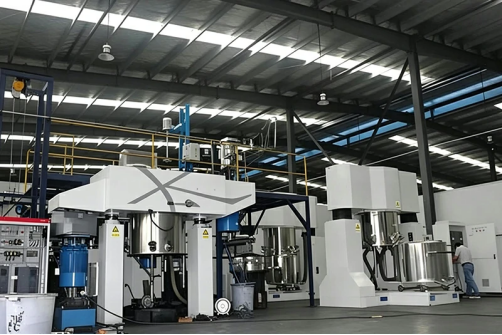
At KONSENT, we specialize in formulating high-performance industrial wood adhesives tailored to your specific manufacturing machinery and material requirements. Whether you need extreme heat resistance for edge banding or bulk supply for OEM panel lamination, our engineering team is ready to assist. Contact us today to request technical consultation, arrange product sample evaluations, or discuss your custom bonding requirements.
For the full selection framework that connects application mapping with failure diagnosis and the PUR vs EVA trade-off, see our industrial woodworking adhesive selection guide.
Frequently Asked Questions (FAQs)
1. What is the difference between standard wood glue and industrial wood adhesives?
Standard wood glue is typically formulated for manual, slow-paced carpentry with broad tolerances. Industrial wood adhesives are engineered for high-speed automated machinery, featuring precise open times, setting speeds, thermal resistance, and strict batch-to-batch viscosity consistency required for mass production.
2. Why does my edge banding peel off near ovens in kitchen cabinets?
Peeling occurs because standard edge banding adhesives reactivate and soften under high heat. To prevent this, manufacturers must use a high-heat-resistant industrial edge banding adhesive specifically formulated to withstand the thermal cycles of kitchen environments.
3. How do I prevent adhesive bleed-through when working with thin wood veneers?
Bleed-through is caused by adhesives with low viscosity or excessive application thickness penetrating the wood pores. You can prevent this by using a high-solid industrial veneer adhesive, controlling the application weight, and optimizing the pressing pressure.
4. What adhesive characteristics should I look for in flat-pack MDF furniture production?
For MDF panel lamination and flat-pack assembly, prioritize an industrial panel lamination adhesive with high solids content to prevent excessive absorption into the porous MDF, alongside an open time that matches your automated pressing cycle.
5. How does factory temperature affect woodworking adhesive performance?
Ambient temperature drastically impacts the viscosity and curing speed of adhesives. Cold factory floors can cause adhesives to thicken and fail to wet the substrate properly, while high temperatures can shorten the open time too much. Suppliers can provide customized formulations adjusted for your specific seasonal factory conditions.
6. Can KONSENT provide customized adhesive formulations for unique production lines?
Yes. As an experienced furniture glue manufacturer, KONSENT can adjust the viscosity, curing speed, and tack properties of our adhesives to perfectly match your specific substrates, application machinery, and environmental requirements.