
Buying woodworking adhesives by the drum, tote, or container load is a procurement decision that shapes product quality, compliance, and margin for months at a time. This sourcing guide is written for the purchasing and engineering teams at furniture, cabinet, and millwork factories. It explains how to match adhesive chemistry to each production process, read the grade standards that protect you in regulated export markets, understand what drives bulk price per kilogram, vet a manufacturer before you commit, and set up sampling and OEM supply. For the chemistry basics and a general selection overview, start with our wood adhesive guide for furniture manufacturers, then return here for the buying decisions.
Table of Contents
- Match the Adhesive to Your Production Process
- Understand Adhesive Chemistry: PUR, EPI, PVA, and Hot Melt
- Read the Grade Standards (Do Not Guess)
- What Drives the Cost of Bulk Wood Adhesive
- How to Vet a Woodworking Adhesive Manufacturer
- MOQ, Sampling, and the Ordering Workflow
- OEM and Private Label for Furniture Brands
- Common Sourcing Mistakes to Avoid
- Frequently Asked Questions
- A Worked Example: Specifying Adhesive for a Kitchen Cabinet Line
- Get a Bulk Quote and Free Sample
1. Match the Adhesive to Your Production Process
Furniture factories rarely use one adhesive for every joint. A bond fails when the glue is chosen by price alone instead of by the process it must survive. Map each step of your line to the right chemistry before you request quotes. The table below is a starting point; later sections explain the chemistry behind each choice and the parameters that decide whether the bond actually holds.
| Production process | Recommended adhesive | Why it fits |
|---|---|---|
| Edge banding, profile wrapping | EVA or PUR hot melt | Fast set with no clamping; PUR adds heat and moisture resistance for kitchens and bathrooms |
| Veneer and decorative lamination | PVA (flat) or EPI (humid rooms, large panels) | Gap-filling with low bleed-through; EPI resists humidity and wide panels |
| Membrane press, thermofoil doors | Vacuum membrane press adhesive | Flexible film that survives high press temperature and deep draw |
| Cabinet and assembly gluing | Assembly glue, PVC adhesive | Strong carcass joints; moisture resistance for kitchens and bathrooms |
| Bathroom, exterior, garden furniture | D3 or D4 water-resistant grade | EN 204 water resistance for prolonged humidity and water exposure |
1.1 Edge banding and profile wrapping
PVC, ABS, and wood veneer edge banding, plus profile wrapping of moldings, are typically bonded with hot melt adhesives applied by roller or cartridge. EVA hot melt is the low-cost workhorse for indoor furniture and high-speed lines. PUR hot melt delivers higher heat and moisture resistance, which matters for kitchens, bathrooms, and export programs. If your line runs PUR at all, the choice between liquid PUR and PUR hot melt changes your equipment and open-time window, and we cover that decision in the chemistry section below.
1.2 Veneer and decorative surface lamination
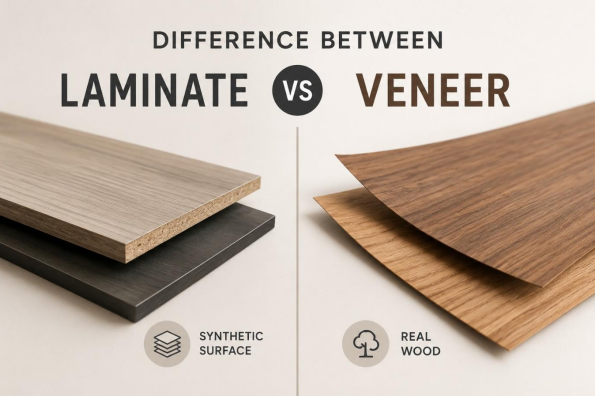
Thin wood veneer and decorative paper lamination demand gap-filling, heat-resistant bonds with minimal bleed-through. PVA is common for flat lamination, while EPI (emulsion polymer isocyanate) handles higher humidity and larger panels because it cures to a water-resistant network. For panel lamination at scale, EPI is the standard where PVA would creep or weaken in damp rooms.
1.3 Membrane press and thermofoil doors
Vacuum membrane pressing of 3D thermofoil and veneer doors needs a flexible adhesive film that stays bonded through high press temperature and deep draw. Adhesive choice and application weight are the difference between a clean door and one with orange-peel or lifting at the edges, so this process deserves its own qualification step on the trial line.
1.4 Cabinet and assembly gluing
Cabinet carcasses, wardrobes, and flat-pack joints rely on assembly glues and PVC-based adhesives for edges and profiles. In kitchens and bathrooms, moisture resistance is non-negotiable, so specify a water-resistant grade for any carcass that sits in a humid room.
1.5 Waterproof and exterior-grade joints
Bathroom vanities, garden furniture, and marine-rated parts need D3 or D4 waterproof grades rather than standard interior PVA. The grade you specify determines whether a joint survives occasional spills or prolonged water exposure. Use our D3 vs D4 comparison to choose the right EN 204 class for each product line.
2. Understand Adhesive Chemistry: PUR, EPI, PVA, and Hot Melt
Adhesive names hide very different behavior on the factory floor. Understanding the chemistry helps you brief suppliers, write specifications, and avoid paying for performance you do not need. The comparison below summarizes the main families used in furniture production.
| Chemistry | Bond strength | Cure mechanism | Heat & moisture | Relative cost | Best use |
|---|---|---|---|---|---|
| PVA (white / yellow glue) | Good, interior | Air dry (evaporation) | Low | $ | Flat lamination, interior joinery |
| EPI (emulsion polymer isocyanate) | High, water-resistant | Chemical (two-part) | Medium to high | $$ | Panels, humid rooms, large surfaces |
| EVA hot melt | Good | Instant (cooling) | Low to Medium | $ | Edge banding, high-speed lines |
| PUR hot melt | High | Moisture cure | High | $$$ | Kitchens, bathrooms, demanding edges |
| Liquid reactive PUR | Very high, flexible | Moisture cure | High | $$$ | Structural joints, dissimilar substrates |
2.1 PVA (polyvinyl acetate)
PVA is the familiar white or yellow glue. It is water-based, easy to clean up, and inexpensive, but its bond softens with heat and weakens with humidity. It suits interior flat lamination and non-structural joinery where the joint never sees water. For any humid or wet environment, move up to EPI or a D3/D4 grade.
2.2 EPI (emulsion polymer isocyanate)
EPI is a two-part system: a water-based emulsion plus a hardener that cross-links the film into a network resistant to water and heat. It is the standard choice for veneer and panel lamination in humid rooms and for large surfaces where PVA would creep. The trade-off is a pot life after mixing and a slightly higher material cost, which is usually recovered through fewer field failures.
2.3 Hot melt: EVA vs PUR
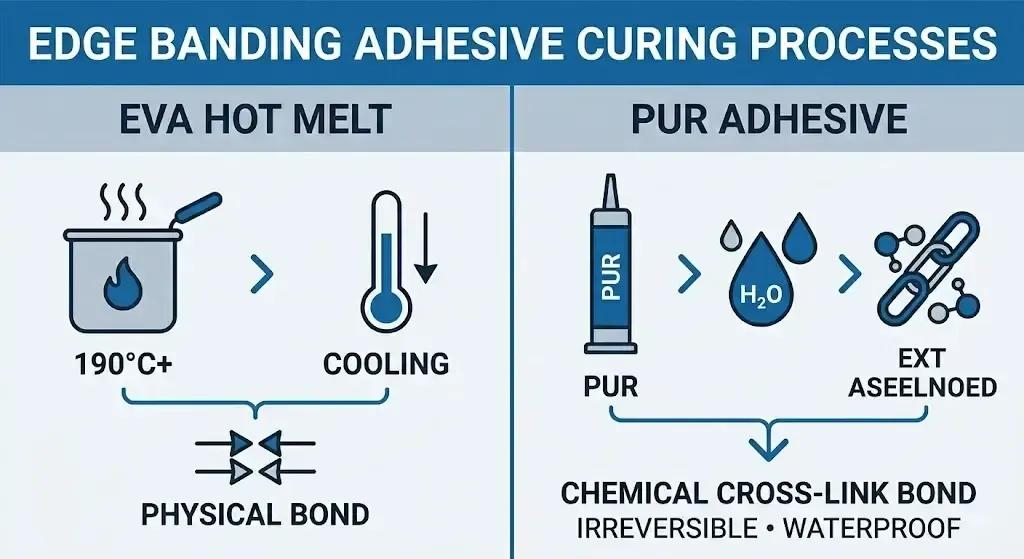
Hot melts set the instant they cool, so there is no clamping and no cure wait, which is why they dominate edge banding. EVA is cheaper and adequate for dry indoor furniture. PUR hot melt reacts with ambient moisture to form a permanently flexible, heat- and moisture-resistant bond, which is why it is specified for kitchens, bathrooms, and export programs. The two are not interchangeable: PUR needs different application temperatures, scrapers, and cleanup. Our liquid PUR vs PUR hot melt guide helps you decide which reactive format fits your line.
2.4 Liquid reactive PUR
Liquid reactive PUR is a one-component, moisture-curing adhesive supplied in cartridges or drums. It builds a strong, flexible bond that bridges wood, metal, and some plastics, which makes it useful for structural and dissimilar-substrate joints. It costs more per kilogram than PVA or EVA, but its open time and final strength can remove a second fastening step.
2.5 Application parameters that decide bond quality
Even the right chemistry fails if the process window is wrong. These are the parameters engineers should lock with the supplier and verify on the first trial batch.
| Parameter | Typical range | Why it matters |
|---|---|---|
| Open time (assembly) | 5 to 30 minutes for PVA/EPI; seconds to minutes for hot melt | Too short and joints are misaligned before clamping; too long and lines slow down |
| Clamp / press time | 20 to 60 minutes for PVA; 30 to 90 minutes for EPI | Releasing before cure causes joint spring-back and weak bonds |
| Application temperature | 150 to 200 C for EVA; 110 to 140 C for PUR hot melt | Wrong temperature scorches film or gives poor wetting |
| Substrate moisture | 8 to 12 percent for wood; dry and dust-free for MDF | High moisture weakens PVA and causes bubble formation |
| Glue spread / weight | 120 to 200 g per square meter for lamination | Too little starves the joint; too much bleeds through veneer |
| Ambient conditions | 15 to 30 C, low dust, stable humidity | Cold or damp shops extend cure and invite failure |
3. Read the Grade Standards (Do Not Guess)
A supplier’s claim of waterproof or eco-friendly means nothing without a standard behind it. These are the marks that matter for furniture factories shipping to regulated markets.
3.1 EN 204 D3 and D4 (water resistance)
EN 204 classifies emulsion adhesives, mostly PVA-based, by resistance to water. D3 resists occasional exposure to cold water and high humidity; D4 withstands frequent or prolonged water exposure and is the safer choice for bathrooms, kitchens, and outdoor furniture. Always ask for the test method and result, not just the letter, and map each grade to specific furniture applications so your spec sheet is unambiguous.
3.2 Formaldehyde classes (E0, E1) and EN 71-3
Indoor air quality rules cap formaldehyde emission. E0 is tighter than E1, and for children’s furniture you should also require EN 71-3, which limits migration of certain elements, plus REACH compliance. Request the full document package from any supplier you qualify so your buyers’ audits pass without delay.
3.3 REACH, GB 18583, and food-contact needs
Exports to the EU require REACH; the Chinese market is governed by GB 18583-2008 limits on harmful substances in adhesives. Request valid test reports issued by an accredited lab, dated within the last 12 months, and matched to the exact product and batch you will receive. For the full product and application matrix, visit the woodworking furniture adhesives topic page.
4. What Drives the Cost of Bulk Wood Adhesive
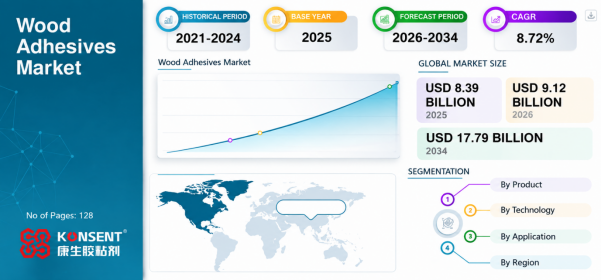
Price per kilogram is not a single number. Before you compare quotes, understand the cost levers so you are comparing like for like. The table shows typical relative cost tiers; your actual quote depends on formulation, packaging, and volume.
| Cost lever | What changes the price |
|---|---|
| Base chemistry | PUR and EPI typically cost more per kg than PVA or EVA because of raw material and curing-system cost |
| Solid content | Higher solids mean less water to evaporate and more bond per gram, which can lower total applied cost even at a higher sticker price |
| Packaging | A 1 kg retail bottle costs far more per kg than a 200 kg drum or a 1,000 kg IBC tote; volume packaging is where bulk buying pays off |
| Order volume and MOQ | Suppliers price by committed annual volume; a stable yearly forecast usually earns a better rate than one-off purchases |
| Lead time and shipping | Sea freight in full containers is cheaper per unit than air or LCL, but ties up cash and warehouse space |
Before you issue an RFQ, list the questions that protect you in negotiations. Our checklist of ten questions to ask before buying wood adhesive in bulk covers MOQ, payment terms, test reports, retention samples, and penalty clauses so your specification stays enforceable.
5. How to Vet a Woodworking Adhesive Manufacturer
A low quote is worthless if batches vary from one shipment to the next. Use this checklist before you commit to a supplier, and keep notes on each candidate so procurement can compare objectively.
- Production capacity and lead time: Can they hold your volume in peak season without slipping weeks behind?
- In-house lab and QC: Do they test viscosity, solids, pH, and bond strength per EN 204 or EN 1465 on every batch?
- Batch traceability: Can they show the retention sample and production record for any drum you receive?
- Certifications: ISO 9001, REACH, EN 71-3, GB 18583, and any customer-specific approvals.
- Sample and trial policy: Do they ship a free sample and accept a small trial batch before the full purchase order?
- R&D and custom formulation: Can they adjust open time, temperature range, or substrate match to your line?
- References: Ask for two furniture-factory customers with a similar process.
If you are sourcing from overseas, add a factory-audit and logistics layer. Our seven checks before importing woodworking adhesive from China covers capacity verification, dangerous-goods shipping, and video factory tours so your audit is practical rather than cosmetic.
6. MOQ, Sampling, and the Ordering Workflow
A clean ordering process prevents most field failures. A typical factory-direct workflow looks like this:
- Send your process, substrate, target grade, and monthly volume to the supplier.
- Receive a technical recommendation and a free sample.
- Run a line trial on your real substrate and equipment.
- Approve the sample and lock the specification.
- Place the bulk purchase order against the agreed spec, with retention-sample and test-report clauses.
Minimum order quantities for factory-direct adhesive commonly start at one pallet or one IBC tote. Tell your supplier your true annual volume early; it changes both price and production priority. When you are ready, request a sample and a quote through our contact page.
7. OEM and Private Label for Furniture Brands
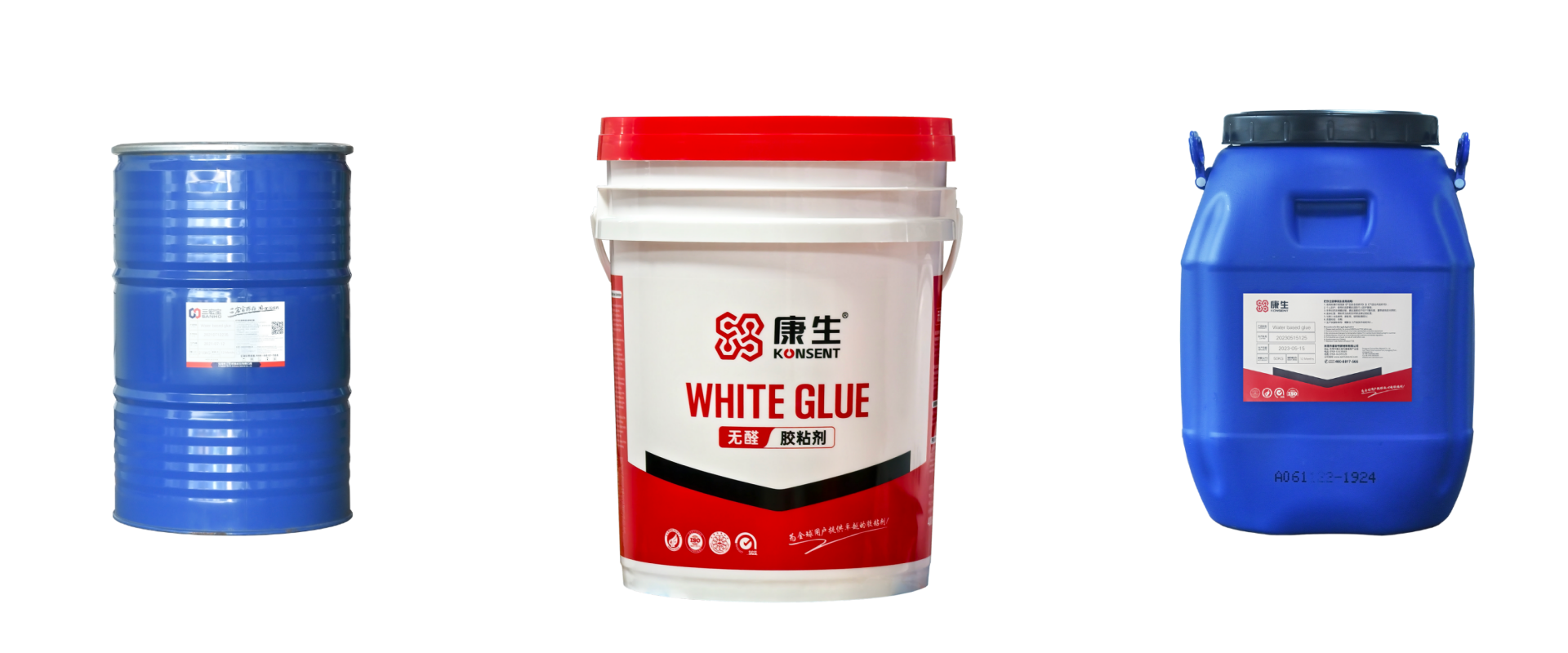
Brands that want a consistent, own-label adhesive can order custom-formulated product packaged under their name. Share your open time, temperature range, substrate list, and compliance targets; the manufacturer formulates, lab-tests, and packages to spec. This is especially useful for export programs that must show a single responsible supplier on documentation. Discuss your specification with our team via the contact page so we can scope a trial batch.
8. Common Sourcing Mistakes to Avoid
- Buying on price per kg alone and ignoring applied cost.
- Skipping the line trial on your actual substrate and machine.
- Accepting a grade claim without a dated test report.
- Ordering a generic adhesive for a process that needs a specific chemistry.
- Having no retention sample when a batch fails in the field.
- Weak export documentation that blocks customs or retail audits.
- Relying on a single supplier with no qualified backup.
9. Frequently Asked Questions
What is a typical MOQ for factory-direct wood adhesive?
Most suppliers start at one pallet or one IBC tote. A higher committed annual volume usually lowers the per-kg rate and improves production priority.
Can you match my current adhesive specification?
Yes. Share your open time, temperature range, substrate list, and compliance needs, and we can formulate a custom or private-label product.
Do you provide REACH, EN 71-3, and GB 18583 test reports?
Yes. We supply accredited-lab test reports matched to the product and batch you receive.
Which grade should I use for bathroom cabinets?
Specify D4 waterproof grade for bathroom and other high-humidity cabinetry to avoid delamination.
What is the typical shelf life?
Most emulsion and reactive adhesives store 6 to 12 months unopened in a cool, dry place; confirm the date code on each batch.
Do you ship internationally?
Yes. Contact us with your destination and volume so we can confirm routing, lead time, and any dangerous-goods requirements.
How long does a line trial take?
After we receive your substrate and process details, sampling and a first trial batch typically run within two to four weeks, depending on formulation complexity.
What documents come with a bulk order?
Expect a certificate of analysis per batch, the relevant compliance test reports, a material safety data sheet, and a retention-sample record for traceability.
What is open time, and why does it matter?
Open time is how long you have to position and clamp a joint after applying adhesive before the bond sets. Match it to your line speed: too short causes misalignment, too long slows throughput.
How should adhesive be stored on the shop floor?
Keep containers sealed, away from direct sun and freezing, ideally between 5 and 30 C. Frozen or overheated adhesive can separate and lose strength even after it returns to room temperature.
10. A Worked Example: Specifying Adhesive for a Kitchen Cabinet Line
To make the guidance concrete, consider a mid-size factory producing laminate and PVC-edged MDF cabinets for export to the EU. Their specification might look like this:
- Carcass and interior joinery: PVA graded to D3 for general humidity, stepping up to D4 for any bathroom vanity components.
- Back panels and large laminated surfaces: EPI for water resistance and to prevent creep on wide panels.
- Edge banding: PUR hot melt on the door and worktop edges that sit near heat and moisture, EVA hot melt on dry interior edges to control cost.
- Membrane-pressed doors: vacuum membrane press adhesive matched to the specific thermofoil film.
- Children’s furniture ranges: low-formaldehyde E0 adhesive with EN 71-3 and REACH documentation.
- Compliance pack: REACH and GB 18583 test reports, certificates of analysis per batch, and retention samples held by both parties.
The same factory would then run a line trial on each adhesive, lock the specification, and place the first bulk order against a yearly volume forecast to secure the best rate. This is exactly the workflow the earlier sections describe, applied end to end.
11. Get a Bulk Quote and Free Sample
Tell us your process, substrate, target grade, and monthly volume, and we will recommend the right adhesive and send a free sample for a line trial. Start your request on the contact page, and our technical team will follow up with a matched specification and pricing.
